What does a stain color change add to the cost?
A stain color change adds $1 to $3 per square foot to the refinishing cost. If you're changing the color, we apply stain and allow full penetration and dry time before applying the finish.
Which floor finishes do we offer?
We offer oil-based and waterborne polyurethane, plus hardwax-oil for a natural matte look. For a polyurethane finish, we flow on the coats and screen or buff between coats for adhesion.
When can furniture go back?
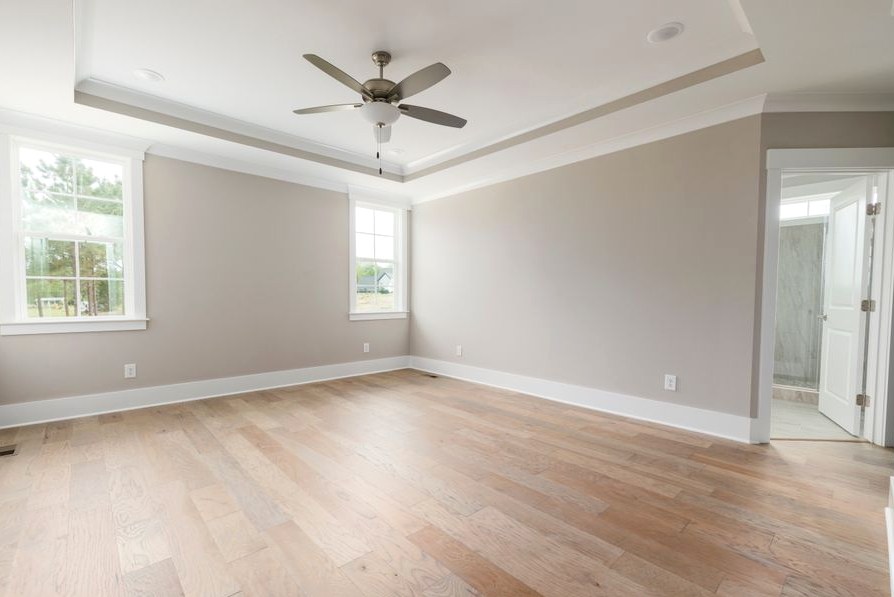
We finish with a final buff and allow a cure period before furniture returns so the finish can harden fully. We don't promise a fixed turnaround here: the schedule needs to include the drying and curing stages, not just the time we spend applying the finish.
From First Call to Finished Job
-
Tell Us What You Need
Tell us what you need done and when, you'll get a straight answer, not a sales pitch.
-
We Walk the Job
We come out, look at the space, and confirm exactly what the job involves.
-
Clear, Written Price
You get the scope and the price in writing before any work starts. No surprises.
-
We Do the Work
Our crew does the work, checks it, and leaves the site clean. You see everything we did.
What this typically involves:
- Edge the perimeter and hand-scrape corners so the whole floor reaches the same smoothness
- Fill gaps, cracks, and nail holes, then re-sand so filler sits flush
What It Typically Costs
Typical ranges, not a fixed price - the exact number is confirmed in writing before work starts.
$3–$8
Good to Know Before You Call
Can you match a repair to the rest of my existing floor?
For board replacement we source matching species and profile, weave the new boards into the field rather than blocking them off, then sand and finish the whole area together so the repair blends. An exact match on an old, ambered floor is hardest with brand-new wood, and we'll tell you honestly how close it will get.
What's hardwax oil and why would I pick it over polyurethane?
Hardwax oil penetrates the wood for a natural, low-sheen matte look and is easy to spot-repair without recoating the whole floor. Polyurethane sits on top as a harder film with more scratch and water resistance. Oil suits people who want a raw, matte feel and easy touch-ups; poly suits high-traffic and busy households.
Do I need to move out during the work?
Not usually. We work room by room where possible and the finishes we use are low enough odor that most families stay, keeping off the freshly coated areas. For a whole-house oil-based job, being away for the strongest cure days is more comfortable.
A Few More Questions
How often should hardwood floors be refinished?
A full sand-and-refinish is a once-a-decade-or-more event for most homes, over-sanding shortens a floor's life. A screen-and-recoat every few years in high-traffic homes refreshes the finish and delays the day a full refinish is needed, which is the cheaper way to protect the wood.
Will refinishing get rid of pet stains and deep scratches?
Surface scratches and gray sand right out. Deep gouges and dark pet stains that have soaked into the wood are the hard cases, sanding removes what it can, stubborn stains may need board replacement, and we're upfront about which marks will fully disappear and which will only fade.
How do I know if my floors can be refinished or need replacing?
It comes down to wear-layer thickness. Solid hardwood can usually be sanded several times over its life; most engineered floors can take one light refinish if the veneer is thick enough. If boards are cupped past flat, sanded down to the tongue, or water-blackened through, replacement of those boards is the honest call, we check before quoting a full sand.
What's the difference between refinishing and a screen-and-recoat?
A full refinish sands back to bare wood and rebuilds the finish, it removes deep scratches, gray, and lets you change color. A screen-and-recoat lightly abrades the existing finish and adds one fresh coat; it's far cheaper and faster but only works while the old finish is intact and the wear hasn't reached the wood.
How much dust does floor sanding make?
Far less than the old reputation if it's done right. We run a dust-containment system that pulls fines off the sander as it cuts, and we seal off the rest of the house. You'll still want to wipe surfaces after, but it's nothing like the whole-house film sanding used to leave.
Serving Pittsfield and Nearby
We cover Pittsfield, MA. Call (413) 347-4859 to confirm coverage for your address.
What You Can Hold Us To
Straight Answers
Talk to a local pro now: (413) 347-4859.
Updated October 2026